|
|
Orthodontics is the branch of dentistry that specializes in the diagnosis,
prevention and treatment of dental and facial irregularities. These includes
treatment of different conditions:
Orthodontist requires professional skill in the design, application and control
of corrective appliances, such as braces and retainers, to bring teeth, lips and
jaws into proper alignment and to achieve facial balance.
The results of orthodontic treatment can be dramatic - beautiful smiles, improved
dental health and an enhanced quality of life for many people of all ages. Outstanding
results are also dependent on maximizing the coordination of care between you and
our practice.
|
Types of Orthodontic Treatments
|
| Metal Braces |
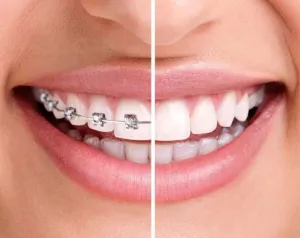
Conventional metal braces are now smaller, more efficient and comfortable In recent years following many advances in orthodontic materials such as metal wires and brackets. |
|
|
| Clear Braces |
The metal brackets on braces can now be done clear or colored, depending on the patient's preference. Clear braces makes wearing braces less noticeable |
|
| |
|
|
| Light lingual or Internal Braces |
Lingual braces are attached to the inside or lingual side of the teeth which makes them completely non-visible. This is particularly well-suited for adults whose professions keep them in the public eyes. |
|
|
| Retainers |
A retainer is a custom-made, removable appliance that helps teeth to maintain their new position after braces have been removed. Retainers can also be used to treat minor orthodontic problems |
|
|
Signs for Early Orthodontic Examinations
- Early or late loss of baby teeth
- Difficulty in chewing or biting
- Mouth breathing
- Crowding, misplaced out teeth
- Jaws that shift or make sounds
- Biting the cheek or roof of the mouth
- Teeth that meet or bite abnormally or not at all
- Jaws and teeth that are out of proportion to the rest of the face
Benefits of Early Detection for Orthodontic Treatment
- Guide the growth of the jaw
- Regulate the width of the upper and lower dental arches
- Guide incoming permanent teeth into desirable positions
- Correct harmful oral habits
- Improve personal appearance and self-esteem
- Preserve or gain space for permanent teeth that are coming in
Procedure of Dental Braces Treatment
1. First Evaluation and diagnosis
- Medical records are made
- An appropriate treatment plan is made based on analysis of the gathered information
- An impression of your teeth and jaw is taken
2. Fitting of braces
- The braces are placed on with bands that applies the forces required to align teeth
3. Checkup visits are made to adjust your braces on monthly basis
4. Retainers usually need to be worn during night time after braces are
removed to prevent relapses.
Recovery Expectations
Most people have some discomfort after their braces are first put on or when
adjusted during treatment. After the braces are on, teeth may become sore and
may be tender to biting pressures for a few days. Patients can usually manage
this discomfort well with pain medication.
Care of Dental Braces
- Patients with braces must be careful to avoid hard and sticky foods
- Patients must not chew on pens, pencils or fingernails because chewing
on hard things can damage the braces.
- Follow your orthodontist directions on how often to brush, how often to floss
and use of other cleaning aids to help maintain good dental health.
|
|
|
|
|
| |
| |